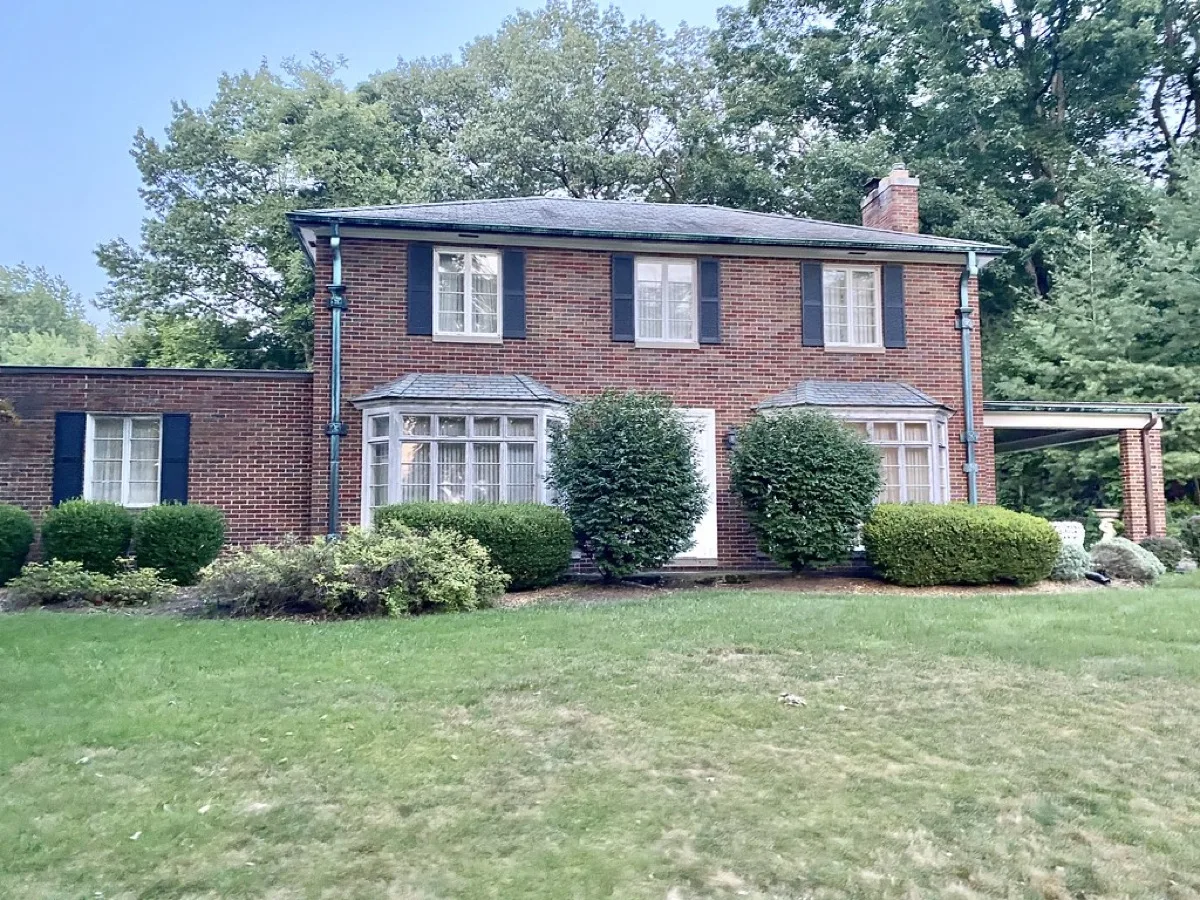
Gutter Replacement in Charlotte, NC
Old gutters stripped and hauled away, fascia repaired where it needs it, and new seamless aluminum hung the same day across Mecklenburg County.
Replacement Is a Different Job From a New Install
Most gutter pages on the internet talk about installation as though every house is a new build with bare fascia waiting for its first gutter. Replacement work on an existing Charlotte home is a different job with a different sequence and a different set of risks. There is an old system to remove and dispose of. There is fascia behind it that has been wet for an unknown number of years. There are existing downspout locations and underground extensions that may or may not still be worth reusing. And there is a reason the old system failed, which needs to be identified before the new one goes up in exactly the same place.
That last point matters more than anything else on this page. A gutter replacement that repeats the original mistakes fails the same way. If the original installer spaced hangers at 48 inches, if the downspouts were undersized for the roof area, if the runs were pitched flat, or if the trough was 5 inch on a roof that drains too much water for 5 inch, then hanging brand new aluminum in the same configuration buys you nothing but a fresh coat of paint. Every replacement we quote in Charlotte starts with a diagnosis of why the old system failed, and the new design corrects it.
Charlotte makes this worse than average. The city takes 43 to 45 inches of rain in a normal year against a national average near 38 inches, and most of that arrives in intense summer bursts between May and September rather than as steady drizzle. July is the wettest month by rain day count, averaging close to 17 days with measurable rain. A gutter system here is not handling a gentle flow. It is handling short, violent volume, repeatedly, for decades. Systems that were marginal on the day they were installed show it here within ten years.
If your gutters are structurally sound and the problem is one sagging run or a couple of leaking seams, you want gutter repair rather than a full replacement. If you have no gutters at all or are adding runs to an addition, see seamless gutter installation.
Signs Your Charlotte Gutters Need Replacing
Age alone is not a reason to replace. Aluminum seamless gutters last 20 to 30 years in this climate when they were hung correctly and cleaned twice a year, and copper lasts 50 years or more. What tells you a system is finished is the pattern of the failures rather than any single one of them. Here is what we look for on a replacement assessment.
Once a steel or older aluminum gutter is perforated, sealant is a temporary patch at best. Water keeps finding the next weak spot along the same corroded run.
Hairline splits open wider every freeze and thaw cycle. Charlotte averages 10 to 15 freezing nights a year, which is enough to work a crack open season after season.
One sagging run is a repair. Sagging on three or four elevations usually means the fastening system and often the fascia behind it have reached end of life together.
Stains running down the wall below the gutter line mean water has been getting behind the gutter long enough to wet the cladding repeatedly.
Pooled water in the trough means the slope is gone, which usually means the hangers or the fascia have shifted. Standing water accelerates corrosion from the inside.
Mecklenburg County clay drains slowly. When gutters overflow repeatedly, the water lands at the foundation and finds its way in, and no amount of interior sealing fixes the source.
The repair versus replace threshold
The honest dividing line is cost and distribution. Localized failure on an otherwise sound system is a repair, full stop, and any contractor who quotes you a whole house replacement for one sagging run is selling rather than diagnosing. Distributed failure is a replacement. When three or more elevations have problems, when the same section has been patched twice, or when the repair estimate lands above roughly half the replacement estimate, replacing resets the entire system to zero and comes with a fresh warranty on all of it.
There is a second case for replacement that has nothing to do with damage. Plenty of Charlotte homes have gutters that were correctly installed and are still watertight, but were undersized for the roof they serve. A 5 inch K style trough moving water off a large, steep, south facing roof plane in a July downpour simply overtops, every time, no matter how clean it is. That is a design problem, not a maintenance problem, and the fix is replacement with 6 inch trough and larger outlets. Our gutter sizing guide for Mecklenburg County walks through how roof area, pitch, and rainfall intensity determine the right size.
The Gutter Replacement Process, Step by Step
A standard single family replacement in Charlotte runs start to finish in one day. Here is the sequence, so you know what is happening on your roofline and when.
We measure every gutter run, count inside and outside corners, check downspout placement against roof area, and probe the fascia for soft spots. This is also where we decide whether the existing 5 inch trough is adequate or whether the roof area calls for 6 inch.
Old gutters, downspouts, straps, and spikes come off first. Everything is hauled away the same day. Aluminum is recycled rather than landfilled. This step exposes the fascia so nothing hides behind the new installation.
With the old gutter gone, the fascia board is inspected along its full length. Soft or rotted sections are cut out and replaced before anything new is hung. Hanging new gutters on rotted fascia is the single most common reason a replacement fails early.
A coil of pre finished aluminum is run through a portable forming machine on the truck and cut to the exact length of each run. There are no lap joints along the length of the gutter, only at corners and outlets.
Hidden hangers are screwed through the gutter into the rafter tails at 24 to 36 inch spacing. Each run is pitched roughly a quarter inch per 10 feet toward its outlet so water moves rather than sits.
Downspouts are sized and placed so no single downspout carries more roof area than it can handle, then strapped to the wall and extended away from the foundation. Existing underground extensions are checked for flow before being reconnected.
Every run is flooded with a hose to confirm pitch, check outlets, and verify there are no leaks at corners or end caps. Fasteners and offcuts are magnet swept from the beds and driveway before the crew leaves.
What Drives the Cost of a Charlotte Replacement
Full replacement on a typical Charlotte home, meaning removal plus disposal plus new seamless aluminum, runs $1,300 to $2,200. The underlying material and labor rate for seamless aluminum is $5.60 to $9.80 per linear foot installed, and a typical Charlotte single family home carries around 145 linear feet of gutter. Where a specific house lands inside that range comes down to a handful of variables that are worth understanding before you compare quotes.
Removal and disposal of the old system
This is the line item that separates a replacement quote from an installation quote, and it is the one most often buried. Tearing off old gutter, pulling spikes and straps, and hauling the material away adds roughly $0.75 to $1.50 per linear foot. On 145 feet that is $109 to $218 of work that a new construction install never has to do. If a replacement quote is priced identically to a bare install quote, ask specifically who is disposing of the old gutters.
Fascia condition
Fascia is the wildcard on every replacement and it cannot be fully priced until the old gutter is off. Rotted sections have to be cut out and replaced at roughly $8 to $20 per linear foot depending on length and accessibility. On a house where gutters have been overflowing for several seasons, expect some. On a house where the old system simply aged out while draining properly, often none. We quote fascia as a contingency with a per foot rate rather than a lump guess, so you pay for what is actually replaced.
Two story access
Charlotte has a lot of two story colonials, and height adds 15 to 25 percent to a replacement. That is not a surcharge for its own sake. It is ladder staging, slower material handling, and a second person spotting for most of the day. Steep roof pitches, walkout basements that make one elevation effectively three stories, and tight side yards between houses in older neighborhoods like Dilworth and Plaza Midwood all push toward the upper end.
Trough size and profile
Moving from 5 inch to 6 inch K style adds roughly 10 to 20 percent to the material line. On a Charlotte roof that has been overtopping, that is usually money well spent, because 6 inch trough with 3 by 4 inch downspouts carries substantially more volume than 5 inch with 2 by 3 inch. Half round profile, common on period homes, costs more than K style in both material and labor because it requires different hangers and more careful joint work.
Roofline complexity
Corners cost money. Every inside and outside miter is a hand formed, sealed joint, and it is one of the few joints a seamless system still has. A simple ranch with four long straight runs is cheaper per linear foot than a house of the same total footage broken into a dozen short runs with gables, dormers, and bump outs. When comparing two quotes on the same house, check that both counted the same number of corners and downspouts.
Our Charlotte pricing guide covers per linear foot rates for every material, guard type, and add on, with worked examples for different home sizes.
Gutter Cost Guide →Material Choices for a Charlotte Replacement
Aluminum is the default in North Carolina and it is the right default for the overwhelming majority of replacements. It does not rust, it is light enough to hang without overloading old fascia, it comes pre finished in a wide color range so it never needs painting, and it forms cleanly through a portable machine on site. Standard residential coil is .027 gauge; heavier .032 gauge costs slightly more and resists denting from ladders and falling limbs noticeably better, which is worth considering on wooded lots.
Copper is the upgrade, and it shows up on replacements in Charlotte's older and higher end neighborhoods, Myers Park and Eastover in particular, where the architecture carries it and the surrounding homes set the expectation. Copper runs $25 to $50 per linear foot installed, so several times aluminum, but it lasts 50 years or more and patinas rather than degrades. On a historic home with a slate or cedar roof, copper half round is often the only replacement that looks correct.
Galvanized steel still exists and we generally steer replacements away from it in this climate. It is stronger than aluminum against impact, but in a place with 43 plus inches of annual rain and high summer humidity the galvanizing eventually gives out and the trough rusts from the inside where you cannot see it. A large share of the rusted through gutters we tear off in Charlotte are steel. Vinyl is cheaper again and we do not install it at all on replacements, because it becomes brittle under Carolina UV and sags between hangers under the weight of a hard summer rain.
Color choice on a replacement is worth a minute of thought rather than defaulting to white. The two normal approaches are matching the fascia and trim so the gutter visually disappears, or matching the roof so the gutter reads as part of the roofline. Both look intentional. What looks unintentional is a white gutter on a house with cream trim, which is a surprisingly common result of nobody asking the question. If you are also adding gutter guards during the replacement, that is the cheapest time to do it, since the crew is already up and the guard can be fitted as the runs go on.
Timeline, Permits, and HOA in Charlotte
Timeline on a standard replacement is one day on site, typically seven to nine hours for an average single family home. Because seamless gutter is formed on a truck mounted machine from coil stock, there is no fabrication lead time. Scheduling is the only real wait, and it stretches in Charlotte after major storm events in the May through September window when demand spikes across the whole metro at once. Spring and early fall are the easiest times to book and the best times to replace, spring because the freeze and thaw damage of December through February has already shown itself, and fall because you get a clean system in place before leaf drop.
On permits, standard residential gutter replacement does not require a building permit in Mecklenburg County. You are replacing an existing exterior component in kind, not altering structure. Two situations change that. Work valued above $30,000 requires a licensed North Carolina general contractor under NCGS 87-1, which is well above any normal residential gutter job but can be reached on large estate properties or when gutters are part of a bigger exterior scope. And new downspout connections into underground or municipal drainage can trigger review. If your replacement involves tying downspouts into a buried system for the first time, that is worth a call to Mecklenburg County Code Enforcement before work starts. Our Mecklenburg County gutter permit guide covers the detail.
HOA rules are the more likely constraint in Charlotte, particularly in the planned communities north and south of the city. Most HOA covenants that touch gutters govern color rather than material, and most treat like for like replacement as routine maintenance requiring no submission. The exceptions worth checking before you order coil are neighborhoods with an approved exterior color palette, any change from white or bronze to a non standard color, and any change of profile from K style to half round, which reads as an architectural change to some boards. A quick email to your management company is five minutes of work against the cost of taking a full roofline back down.
Whoever you hire, confirm they carry general liability and workers compensation before anyone goes up a ladder on your property, and get the warranty terms in writing with the material warranty and the labor warranty stated separately. Aluminum coil typically carries a manufacturer finish warranty measured in decades; workmanship warranties vary widely between contractors and that is the number that actually protects you against a run that was pitched wrong.
Replacement Work Across Mecklenburg and Cabarrus
Different parts of the Charlotte metro bring different replacement problems. In older intown neighborhoods such as Dilworth, Myers Park, Eastover, Plaza Midwood, and Cotswold, we are usually removing a system that is well past 30 years, often steel or early aluminum, on homes with mature oak canopy overhead and fascia that has taken decades of overflow. Those jobs carry the highest likelihood of fascia work and the highest chance the homeowner wants half round or copper to suit the house.
In the newer subdivisions, Ballantyne and South Charlotte, and north through Huntersville along the Lake Norman corridor and northeast into Concord, the pattern is different. The gutters are not old, they are underbuilt. Production builders specify the minimum system that meets code, which often means 5 inch trough, wide hanger spacing, and too few downspouts for the roof area. Those replacements are usually driven by chronic overflow rather than visible decay, and the fix is a larger trough with properly spaced outlets rather than the same system in new aluminum. The full list of where we work is on our service area page.
Frequently Asked Questions
How much does gutter replacement cost in Charlotte NC?
How long does a gutter replacement take?
Does homeowners insurance cover gutter replacement?
Do I have to replace the gutters on all sides of the house at once?
Is seamless gutter better than sectional for a replacement?
Should I replace the gutters or just repair them?
Free written estimate on gutter replacement in Charlotte NC and Mecklenburg County.