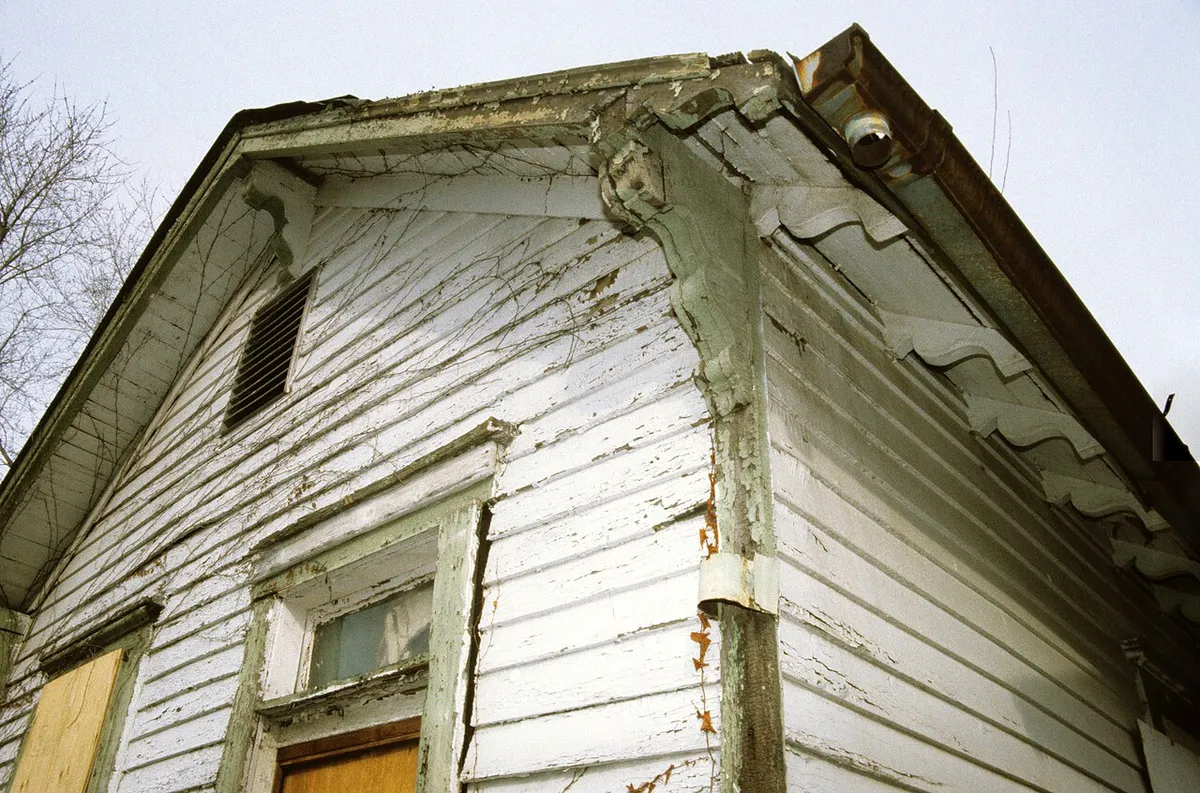
Fascia Repair in Charlotte, NC
Fascia repair in Charlotte usually means rotted boards behind the gutters: about $8 to $20 per linear foot for the damaged sections, with the gutter taken down and rehung on sound wood.
Fascia Repair in Charlotte: What It Costs and Why the Gutter Comes Down
Fascia repair in Charlotte costs about $8 to $20 per linear foot for the sections that have rotted, and on most houses that is a few short lengths behind downspout outlets and inside corners rather than the whole roofline. Charlotte Seamless Gutters handles fascia repair as part of the gutter work: the board is replaced and the gutter rehung in the same visit, which is the only way the repair holds.
The fascia is the board along the ends of the rafter tails that the gutter hangs from. When it softens, no fastener holds: the gutter tips forward, overflows behind itself, and wets the board even more. Charlotte's 43.6 inches of rain a year (NOAA 1991 to 2020 normals) and humid summers mean a board that stays wet behind a clogged or leaking gutter does not dry out between storms.
Signs Your Fascia Boards Need Repair
Press a screwdriver into the board just below the roof edge and behind a downspout outlet. Sound wood resists; rotted wood lets the tip sink with hand pressure.
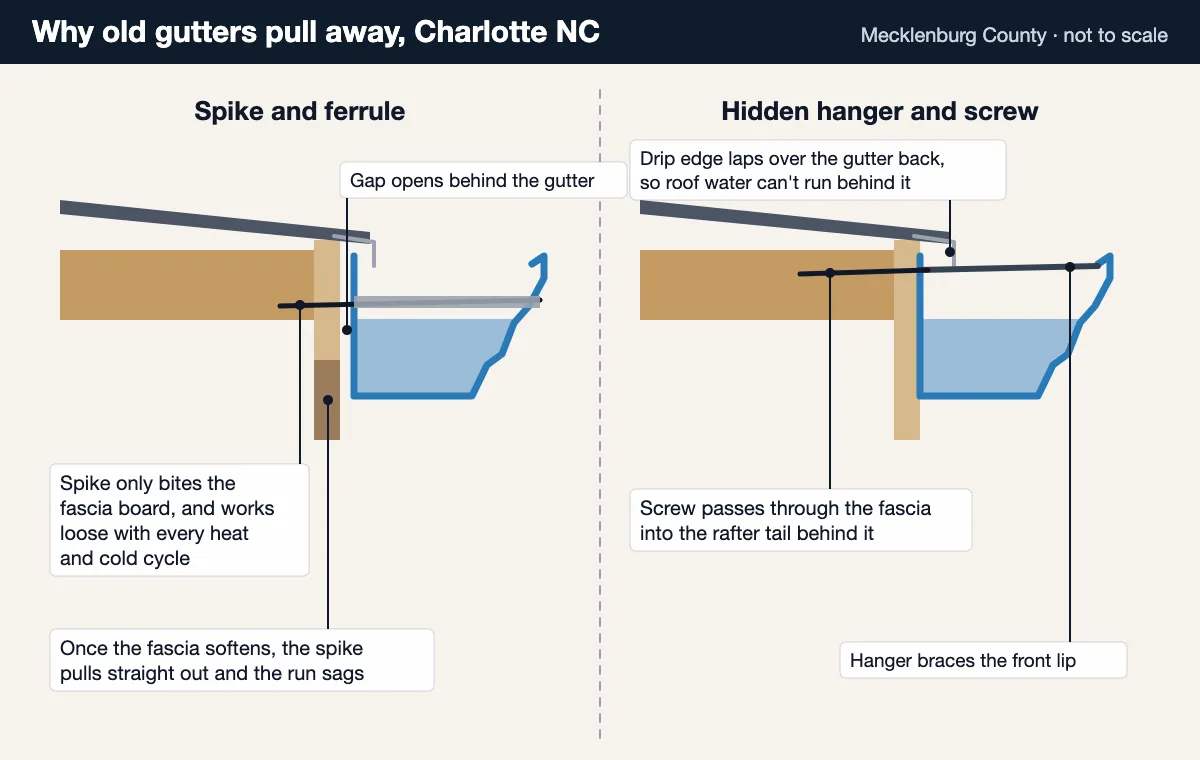
When the board softens, spikes and hangers lose their grip and the gutter tips forward, which sends even more water behind it. The sag is often the first visible sign of rot.
Paint that blisters along the top of the board, or dark streaks below the gutter, means water is getting behind the trough rather than into it.
A gap between the shingles' drip edge and the top of the fascia lets roof water run down the back of the board. Squirrels and birds also use these gaps to get into the soffit and attic.
How Fascia Board Replacement Is Done
The gutter, its hangers and the downspout connection come off that section first. The soft wood is cut back to sound board at a rafter, a new length is fitted and fastened to the rafter tails, and the cut ends and face are primed and painted before anything goes back on. The gutter is then rehung with hidden hangers screwed through the new board into the rafters, pitched toward its outlet.
Two details decide whether the rot comes back. The first is the roof edge: if the shingles have no drip edge or gutter apron lapping into the trough, roof water runs down the back of the gutter onto the new board. The second is the cause of the overflow, whether an undersized trough, a clogged outlet or a run pitched the wrong way. Fixing the board without fixing the water only resets the clock, so a dripping seam, a loose end cap or a sagging run above the rot is gutter repair worth doing in the same visit.
Aluminum fascia wrap is worth it over sound wood because it ends repainting. Over rot it is the most common way a problem gets hidden, so ask whether the boards will be probed and replaced before any wrap goes on.
Fascia Materials and Prices
Material prices per linear foot, from This Old House's 2026 fascia cost guide. Installation labor adds about $6 to $20 per foot and removing the old board $3 to $7 per foot.
| Material | Material cost | Notes |
|---|---|---|
| Wood (primed, painted) | $1 to $3 per LF | Cheapest and most common; needs paint and dry conditions |
| Fiber cement | $1 to $5 per LF | Does not rot; heavier, cut with dust control |
| Composite | $1 to $8 per LF | Does not rot; paintable |
| PVC | $3 to $7 per LF | Does not rot or need paint; moves with heat, needs proper fastening |
| Vinyl | $5 to $9 per LF | Low maintenance trim systems |
| Aluminum (fascia wrap) | $8 to $20 per LF | Coil bent over sound wood; never over rot |
Fascia and Soffit Work in Charlotte Historic Districts
In Charlotte's eight local historic districts (Dilworth, Fourth Ward, Hermitage Court, McCrorey Heights, Oaklawn Park, Plaza Midwood, Wesley Heights and Wilmore), exterior changes are reviewed by the Historic District Commission. Its Policy and Design Guidelines let seamless aluminum gutters with a baked enamel finish go up without a Certificate of Appropriateness only when no alterations are made to the soffit and fascia. Once fascia or soffit work is part of the job, the gutter installation needs administrative approval from HDC staff.
Practically, that means replacing a rotted board like for like is a conversation with HDC staff before work starts, not after. The same guidelines ask that built-in gutters on older houses be repaired and preserved where possible; see copper and half-round gutters for period-appropriate options.
Fascia Repair Questions
How much does fascia repair cost in Charlotte NC?
Who should I call for fascia repair, a roofer or a gutter company?
Can fascia be repaired without taking the gutters down?
What is the best fascia material for a Charlotte house?
Does homeowners insurance pay for rotted fascia?
Free estimate on fascia repair and gutter rehanging in Charlotte NC.